Why You’re Eating Right and Still Feeling Wrong?
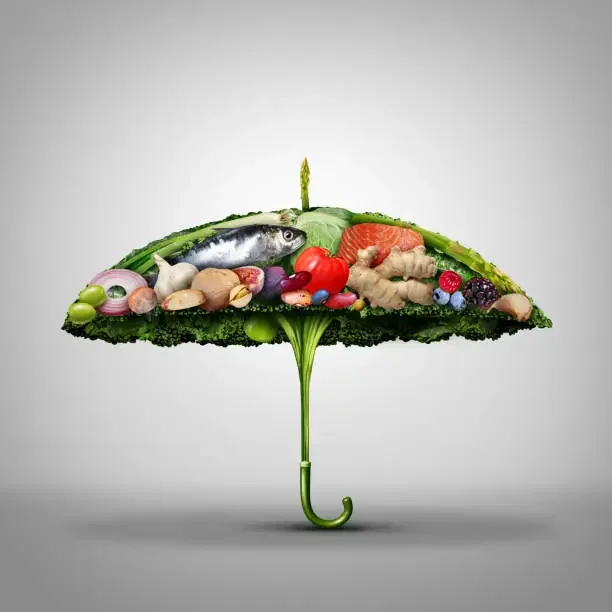
I grew up in Odessa, Ukraine in the 1970s. The tomatoes tasted like tomatoes. The bread tasted like bread. When I arrived in America in 1990 I noticed something felt different about the food — but I couldn’t explain it scientifically. I just knew something had changed.
Thirty years later as a nurse practitioner and integrative medicine specialist I finally understand why.
And it’s not just your imagination either.
The food on your plate today is not the same food your grandmother ate.
A landmark Washington Post investigation published this month confirmed what many of us in integrative medicine have suspected for years. Many of humanity’s most important crops — wheat, potatoes, beans, rice — contain fewer vitamins and minerals than they did a generation ago.
The culprit is invisible. It’s carbon dioxide.
Rising atmospheric CO2 boosts plants’ production of carbohydrates and sugars — without a matching increase in mineral uptake. This effectively dilutes the nutrients in our food. Plants grow bigger and faster. But each bite delivers less zinc, less iron, less protein than before.
A meta-analysis from Leiden University found that nutrients have already dropped about 3.2 percent across all plants since the late 1980s. That number is projected to keep falling.
What this means for you practically:
You can be doing everything right — eating vegetables, choosing whole grains, avoiding processed food — and still be subtly deficient in the minerals your body desperately needs.
This is why so many of my patients come to me exhausted, foggy, inflamed — with lab results that look “normal” but bodies that feel anything but.
Three things you can do right now:
1. Diversify aggressively.
Since every crop responds differently to higher CO2 levels, a diverse diet ensures that mineral losses from one food can be balanced by another source. Don’t eat the same ten foods on rotation. Expand deliberately.
2. Think about nutrient density, not just calories.
Choose foods historically known for mineral richness — organ meats, shellfish, sardines, dark leafy greens, seeds. These aren’t trendy. They’re foundational.
3. Consider targeted testing.
Ask your provider for a micronutrient panel — not just standard labs. Zinc, magnesium, ferritin, B12, vitamin D. Know your actual numbers. Don’t guess.
The food system is changing faster than most people realize. But you don’t have to be a passive victim of it. You just need to know what’s actually happening — and adjust.
That’s what I’m here for.
Anna Breiburg, DNP, is an integrative nurse practitioner based in Palo Alto, CA and founder of TipTopHealth.org
REFERENCES
1. Kaplan, S. (2026, April 30). Carbon pollution is making food less nutritious and risking health of billions. The Washington Post.
2. ter Haar, S.F., van Bodegom, P.M., & Scherer, L. (2025). CO2 rise directly impairs crop nutritional quality. Global Change Biology. Leiden University.
(Largest meta-analysis to date: 43 crops, 29,524 observations. Average nutrient decline of 3.2% across all crops. Zinc showed strongest reductions — up to 37.5% in chickpeas.)
3. Leiden University News Release. (2025, November). Higher CO2 levels are making our food more calorific and less nutritious.
4. Johns Hopkins Bloomberg School of Public Health. Less nutritious crops: Another result of rising CO2.
(When carbon levels rise: protein drops ~10%, iron by 16%, zinc ~9%, magnesium ~9%)
5. NIH / PubMed — Rising Carbon Dioxide and Global Nutrition: Evidence and Action Needed.